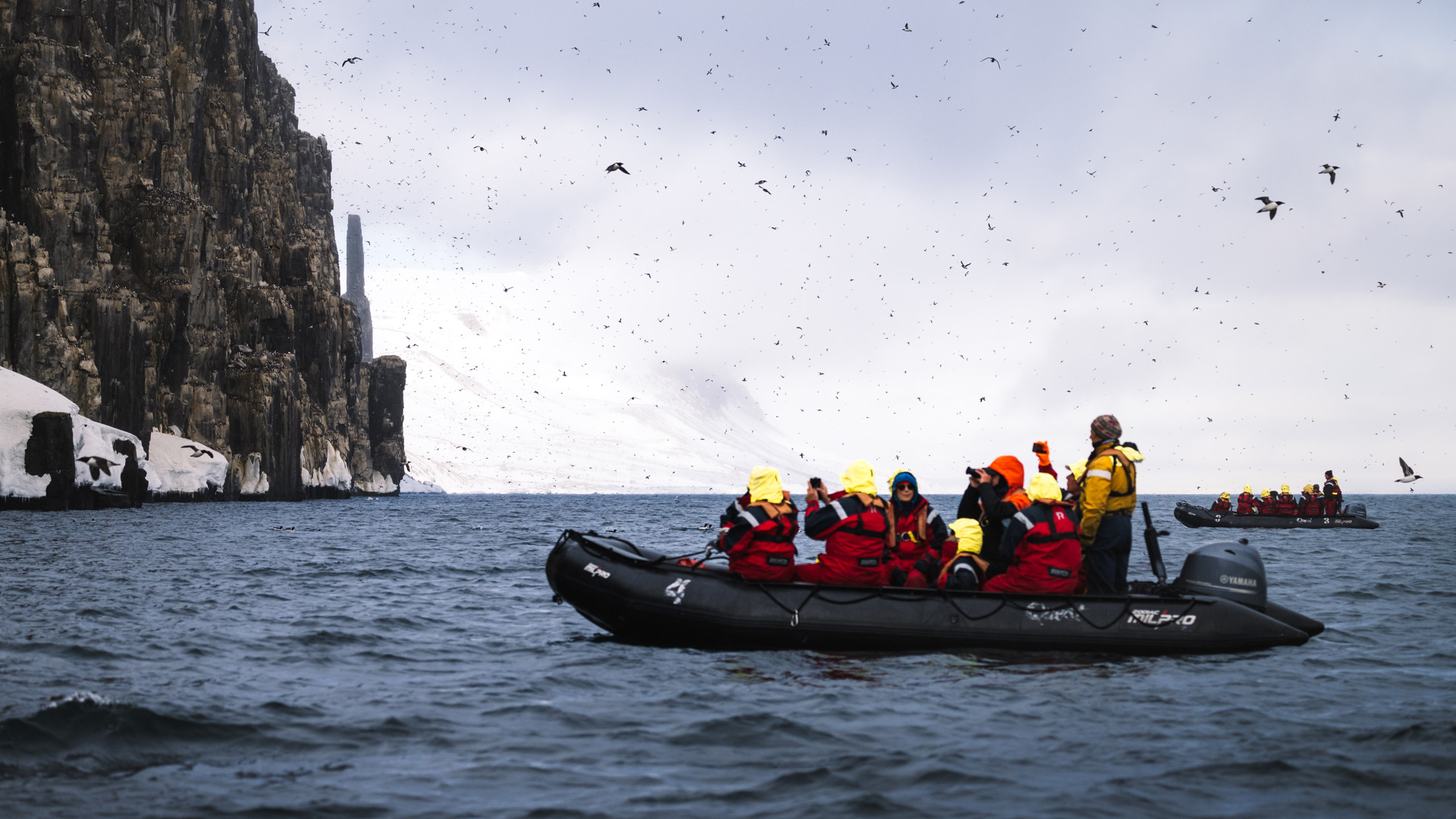
Most of Antarctica happens at a distance. The humpback surfacing off the bow, the leopard seal on a floe, the albatross that has been following the ship since the Drake. Expedition ships sometimes keep a few pairs of binoculars on the bridge, but on a good whale morning they're already in someone else's hands. Bring your own.
This guide covers six pairs, and they are not all the same kind of binocular. One is a proper full-size 10x42 built for long sessions on deck. Four are compacts small enough to live in a jacket pocket on landings. One is a high-magnification 20x50 that needs more care than the others. I've been clear about who each one suits, because the wrong pair on a rolling ship is worse than no pair at all.
This guide is only about binoculars. If you're choosing a camera or telephoto lens, see Best Camera Gear for Antarctica. For what you'll actually be looking at, see our Antarctic wildlife guide.
Quick Answer
If you're buying one pair, get the Vortex Triumph HD 10x42. It's waterproof, nitrogen-purged so it won't fog inside, and covered by Vortex's unlimited lifetime warranty, all for around $100. If you want something that disappears into a pocket for Zodiac cruises, add a compact like the Occer 12x25 or Hontry 10x25. Skip the 20x50 as your only pair unless you'll mostly be glassing from land or a steady rail.
Antarctica Binoculars, at a Glance
6 Picks · Tap to Shop
We may earn a commission on purchases made through these links, at no extra cost to you. Specs are from manufacturer and retailer listings; check the current listing before you buy.
Best Overall
1. Vortex Triumph HD 10x42
The one pair I'd trust for the whole trip
This is the only full-size pair on the list, and it's the one I'd buy first. The 42 mm lenses pull in enough light for grey, overcast Peninsula mornings, and the BaK-4 prisms with fully multi-coated lenses give a clean, bright view of a penguin colony or a distant whale blow. It's O-ring sealed and nitrogen-purged, so spray and cold won't fog the inside.
| Weight | About 22.9 oz |
| Field of view | 334 ft at 1,000 yds |
| Eye relief | 17 mm (works with glasses) |
| Weatherproofing | Waterproof, nitrogen-purged |
| Warranty | Vortex VIP: unlimited, unconditional, transferable |
At 10x, you'll need to brace your elbows on the rail on a rolling day. That's the trade-off for the extra reach. The warranty is the quiet selling point here. If a landing goes wrong and they meet a rock, Vortex repairs or replaces them.
Best Compact
2. Occer 12x25 Compact Binoculars
A pocket pair with better glass than the price suggests
The Occer uses a BaK-4 prism and broadband multi-coating, which you don't always get at this size and price. The 15 mm eyepieces are larger than most compacts, so it's easier to find the image quickly, and the eyecups twist down if you wear glasses.
- Field of view: 273 ft at 1,000 yds, narrower than a full-size pair, so fast-moving birds take more practice to follow.
- Worth knowing: 12x is a lot of magnification for such a small, light body. On a moving Zodiac, you'll get more shake than at 8x or 10x. It works best braced against something.
- Weatherproofing: listed as waterproof by the manufacturer; no IP rating is published, so keep it in a dry pocket during wet landings.
Lightest Pick
3. Hontry 10x25 Compact Binoculars
Wide view, easy to hold, and weighs almost nothing
Of the compacts here, the Hontry has the widest listed field of view (362 ft at 1,000 yds). That makes it easier to find a seal on an ice floe or a skua overhead before it's gone. It folds to palm size, weighs about 0.6 lb, and comes with a carry bag, neck strap and cleaning cloth.
- Best for: travelers who want a light, simple pair for shore walks and don't want to carry a full-size binocular.
- The trade-off: it's rated IPX4, which means splash-resistant, not waterproof. Rain and light spray are fine; a wave over the Zodiac bow is not. Keep it in a zipped pocket or dry bag.
Want the best odds of whales and emperor penguins? Route and timing matter more than optics. We'll match you to the itinerary that puts the wildlife in range.
Plan My Antarctica Trip
Best for Kids
4. AHFLRITO Compact Binoculars
A lightweight, foldable pair for younger travelers
If you're travelling as a family, this is the one to hand to the kids. It's small, light and foldable, and marketed for adults and kids alike, so smaller hands can hold it steady. At this price, it doesn't matter much if it gets dropped on a gravel beach at Half Moon Island.
- Best for: kids, or a spare pair that lives in the cabin for quick looks from the balcony.
- Worth knowing: the listing describes it as waterproof but doesn't publish a rating. Treat it as splash-resistant and keep it dry on Zodiac rides.
Pocket Backup
5. 12x25 Small Pocket Binoculars
The pair you keep in your parka, just in case
The best binocular in Antarctica is the one you actually have on you when a pod of orcas turns up. This pocket 12x25 is the pair you zip into your parka before every landing and forget about until you need it. It's also a sensible backup if your main pair is fogged up from the warm lounge.
- Best for: a grab-and-go backup, or a second pair so your travel partner isn't borrowing yours.
- The trade-off: like the Occer, 12x in a tiny body means more hand shake. Check the current listing for weather-sealing details before relying on it in wet conditions.
Most Magnification
6. FLYANT 20x50 High Powered Binoculars
Serious reach, but not for a rolling deck
The FLYANT uses a BaK-4 Porro prism, green multi-layer coatings and big 50 mm lenses, so it gathers plenty of light. At 20x, you can pick out details on a distant glacier face or a seal hauled out far down the beach that the other pairs on this list can't reach.
- Be honest with yourself: 20x magnifies hand shake just as much as it magnifies the whale. On a moving ship, the image jumps around constantly. It's best used on land, braced on a rail, or on a small tripod in calm anchorages.
- Field of view: narrow, so finding a moving animal takes practice. Spot it with your eyes or a lower-power pair first.
- Weatherproofing: listed as waterproof, but not submersible. Keep it covered on Zodiac rides.
Antarctica Binoculars: Quick Reference
Figures are from manufacturer and retailer listings and independent reviews. Models change, so confirm the current specs before you buy.
| Model | Size | Magnification | Field of View | Weather Sealing | Best For |
|---|
| Vortex Triumph HD | Full-size | 10x42 | 334 ft | Waterproof, N₂-purged | Main pair for most travelers |
| Occer 12x25 | Compact | 12x25 | 273 ft | Waterproof (no rating listed) | Zodiac cruises |
| Hontry 10x25 | Compact | 10x25 | 362 ft | IPX4 splash-resistant | Light shore walks |
| AHFLRITO Compact | Compact | See listing | See listing | Waterproof (no rating listed) | Kids, spare pair |
| 12x25 Pocket | Pocket | 12x25 | See listing | See listing | Grab-and-go backup |
| FLYANT 20x50 | Full-size | 20x50 | Narrow | Waterproof, not submersible | Long-range from a steady spot |
Frequently Asked Questions
Is 10x, 12x or 20x better for Antarctica?
For most people, 10x is the practical ceiling for handheld use on a ship. It gives good reach while staying steady enough to follow a whale. 12x works in a light compact if you brace it, and 20x really needs a rail, a tripod or solid ground.
Should I bring a compact or a full-size pair?
Ideally both. A full-size pair like the Vortex Triumph HD is brighter and steadier for long sessions on deck. A compact fits in your parka for Zodiac cruises and landings, where you won't want anything bulky around your neck.
Do expedition ships provide binoculars?
Some ships keep a few pairs on the bridge or in the observation lounge, but they're shared and rarely free when something exciting shows up. Plan to bring your own pair, one per person if you can.
Will my binoculars fog up in the cold?
Nitrogen-purged binoculars like the Vortex Triumph HD won't fog on the inside. Budget compacts often aren't purged, so they can. The outside lenses of any pair can fog when you step from a warm cabin onto a cold deck. Give them a few minutes outside before you need them, and keep a microfiber cloth in your pocket.
Can I use binoculars on shore landings?
Yes, and they're especially useful there. IAATO guidelines keep visitors at least 5 metres from wildlife on shore, so binoculars let you see details without getting closer than you're allowed.
A Note on Packing
Binoculars go in your carry-on, never your checked bag. The same goes for the cleaning cloth. For everything else you'll need on deck, see our Antarctica packing guide.
The right binoculars help. The right ship, route and season help more. We'll build an itinerary around the wildlife you most want to see.
Get in Touch