
Small Ship vs. Large Ship Antarctica Cruises: Which Is Right for You?
In Antarctica, ship size isn't just about comfort. It decides how often you go ashore, how long you stay and whether you land at all. Here's how to choose.
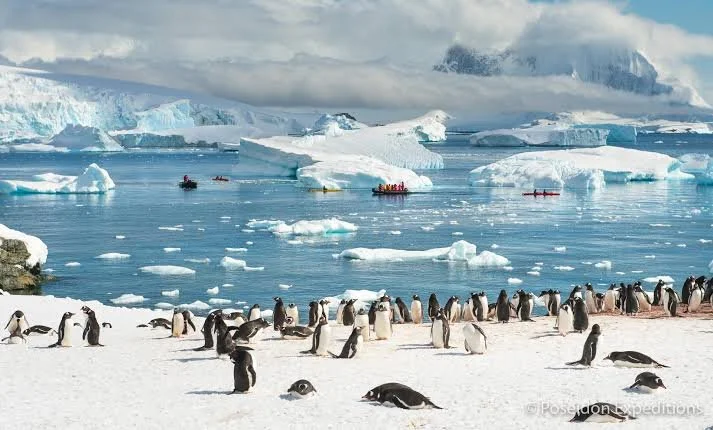
On a Caribbean cruise, a bigger ship means more pools and restaurants. In Antarctica, it can mean less time with the penguins. That's because strict rules limit how many people can land at once, and ships over a certain size can't land passengers at all.
This guide explains how ship size changes your Antarctica trip, from landing rules and Zodiac time to comfort, stability and price. By the end, you'll know which size of ship fits your priorities and budget.
Quick Answer
For most travelers, a small to mid-size expedition ship of about 100–200 guests offers the best Antarctica experience, with more frequent and longer landings. Ships carrying more than 500 passengers can't land anyone, and ships of 200–500 must rotate guests ashore.
| Small (under ~130 guests) | Most time ashore, intimate, often pricier per person |
| Mid-size (130–200) | Best balance of landings, comfort and price |
| Larger (200–500) | More amenities, landings rotated in shifts |
| Over 500 guests | Cannot land passengers in Antarctica |
| Key rule | Max 100 people ashore at one site at a time |
1. The Antarctic Landing Rules Explained
Why ship size matters more here than anywhere else
Antarctic tourism is managed by IAATO, the International Association of Antarctica Tour Operators, alongside rules adopted under the Antarctic Treaty system. Three rules shape every trip:
- Ships carrying more than 500 passengers may not land anyone. They can only cruise past the scenery.
- No more than 100 passengers ashore at one site at a time, with some sensitive sites limited further.
- Only one ship at a landing site at a time, coordinated through a shared scheduling system.
Guides also keep a ratio of roughly one guide for every 20 guests ashore. Put those together and the math is simple: a ship of 100 guests can land everyone at once, while a ship of 400 needs four rotations to give everyone the same landing.
2. Small Expedition Ships (Under ~130 Guests)
Small ships are the classic Antarctic expedition experience. With fewer than about 130 guests, everyone can usually go ashore at the same time, and landings tend to be longer and more frequent.
Pros: more time ashore, more flexibility to change plans, a close-knit atmosphere, easy access to expedition staff and often more Zodiac cruises.
Cons: higher price per person, fewer onboard facilities and, on older small ships, more motion in rough seas.
Examples include Antarctica21's Magellan Explorer, Poseidon's Sea Spirit and Aurora Expeditions' Greg Mortimer. Small ships suit wildlife lovers, photographers and anyone whose priority is time on the ice.
3. Mid-Size Expedition Ships (130–200 Guests)
Mid-size ships are the sweet spot for most travelers. They're big enough for comfortable cabins, good food, a spa or gym and plenty of lounge space, yet small enough to land guests in one or two quick groups.
Many of the newest polar ships fall in this range, including Quark's Ultramarine (around 199 guests), Lindblad–National Geographic's Endurance and Resolution, and Oceanwide's Hondius. Most carry ice-class hulls, stabilizers and full kayaking or camping programs.
If you're unsure where to start, start here. Our cruise line comparison lists the leading mid-size ships side by side.
4. Larger Expedition Ships (200–500 Guests)
Larger expedition ships can still land passengers, but they have to rotate guests to stay under the 100-person limit. In practice, that can mean shorter landings, waiting your turn in the lounge, or one landing a day instead of two.
Pros: more stability in rough seas, more amenities (multiple restaurants, pools, observation lounges), and often lower prices per person or more included.
Cons: less time ashore, less flexibility and a more cruise-like feel.
HX (Hurtigruten) and Viking operate ships in this range. Viking's Octantis and Polaris carry about 378 guests and include submarines, so you can explore underwater instead of waiting for a landing slot. Interested? Read about submersible tours of Antarctica.
5. Ships Over 500 Passengers: Scenic Cruising Only
Some mainstream cruise lines sail big ships past the Antarctic Peninsula, usually as part of a South America itinerary from Buenos Aires or Santiago. These ships carry well over 500 passengers, so nobody steps ashore.
You'll see glaciers, icebergs and possibly whales and penguins from the deck, often for a few days. Prices can start around $3,000–$5,000, much lower than expedition trips. But if your dream includes standing among penguins, a scenic-only cruise will disappoint.
These cruises suit travelers on a tight budget, or those who want a glimpse of Antarctica as part of a bigger trip. Be sure you know which type you're booking.
6. Zodiac Time, Kayaking and Activities by Ship Size
Ship size affects more than landings. Zodiac cruises, the small inflatable boat trips among icebergs and wildlife, also have to be shared out among guests. On a ship of 100, everyone might go out together for an hour or more. On a ship of 400, outings may be shorter, or split across the day.
Optional activities follow the same pattern. Kayaking, camping and snowshoeing are usually capped at small groups (often 10–30 people), so on a large ship only a small share of guests can join, and places book out fast. Small and mid-size ships can offer them to a bigger proportion of guests.
Some larger ships make up for this with features small ships can't carry, like submarines, helicopters or large observation lounges. Viking's subs and Quark's helicopters on Ultramarine are good examples.
7. Onboard Atmosphere: Expedition vs. Cruise Feel
Small ships tend to feel like expeditions. Lectures are informal, guides eat with guests, and the bridge is often open so you can watch the officers navigate through ice. Plans change by the hour, and everyone hears about it in the evening recap.
Larger ships feel more like premium cruises: multiple restaurants, set schedules, entertainment and more space to spread out. That suits travelers who want comfort and structure, but some find it less immersive.
Neither is better in every way. Think about how you like to travel at home. If you prefer boutique hotels and small-group tours, choose a small ship. If you like resorts with lots of options, a larger expedition ship may suit you.
8. Does Ship Size Affect Seasickness?
Somewhat. Larger ships generally ride rough seas more smoothly, but modern stabilizers matter at least as much as size. A newer mid-size ship with good stabilizers may feel steadier than an older ship twice its size.
Hull design matters too. Ships with Ulstein's X-BOW, like Aurora's Greg Mortimer and Sylvia Earle, are designed to slice through waves rather than slam into them. Once you reach the sheltered waters of the Peninsula, motion is usually mild on any ship.
If seasickness worries you, focus on stabilizers and cabin location (midships and low down is best) and read our best seasickness remedies for the Drake Passage.
9. Ice Class, Safety and Why Size Isn't Everything
Size tells you little about how well a ship handles polar waters. What matters more is its ice class: a rating for how strong the hull is and how much ice it can safely push through. Modern polar ships often carry a Polar Class rating from PC1 (the toughest icebreakers) to PC7. Many expedition ships are PC5 or PC6, which lets them operate safely in the loose summer ice of the Peninsula.
Higher ice ratings matter most for trips into heavier ice, such as Antarctic Circle crossings, the Weddell Sea and emperor penguin voyages. Ponant's Le Commandant Charcot, rated PC2, can go where few other passenger ships can.
All ships operating in Antarctica must also follow the International Code for Ships Operating in Polar Waters (the Polar Code), which sets standards for design, equipment and crew training.
10. How Ship Size Affects Price
| Ship size | Typical price per person (10–12 days) |
|---|---|
| Small (under ~130) | $10,000–$20,000+ |
| Mid-size (130–200) | $9,000–$18,000 |
| Larger expedition (200–500) | $8,000–$18,000 |
| Luxury small ships | $15,000–$30,000+ |
| Scenic-only (500+) | $3,000–$6,000 |
Price per person tends to rise as ships get smaller, because fixed costs are split among fewer guests. Larger ships can offer good value, but compare the real number of landing hours, not just the fare. See our full Antarctica trip cost guide.
11. Questions to Ask Before You Book
- How many guests does the ship carry on this sailing?
- How are landings rotated, and how long does each group get ashore?
- How many Zodiacs and expedition guides are on board?
- Does the ship have modern stabilizers?
- Which activities (kayaking, camping, snowshoeing) are offered, and at what cost?
- Is the ship ice-class rated for the itinerary?
Every company calls its ship "small and intimate," so ask for numbers. Our advisors can get these answers for any ship you're considering. Start with which ship you should choose.
12. Which Ship Size Is Right for You?
Choose a small ship if time ashore matters most, you love wildlife and photography, and you're happy to pay more for flexibility.
Choose a mid-size ship if you want the best balance of landings, comfort and price. That's most first-time visitors.
Choose a larger expedition ship if you value stability and amenities, want a submarine or other unique extras, or found a great fare.
Choose a scenic cruise only if landing isn't important to you and budget is the top priority.
Ship Size Comparison Table
| Small | Mid-size | Larger | 500+ | |
|---|---|---|---|---|
| Guests | Under ~130 | 130–200 | 200–500 | 500+ |
| Landings | Everyone at once | 1–2 groups | Rotated | None |
| Time ashore | Most | Good | Less | None |
| Comfort | Good | Very good | Very good | Resort-style |
| Price per person | Higher | Mid | Mid | Lowest |
Small vs. Large Ship FAQs
Do small Antarctica ships get more landings?
Usually. With fewer guests, small ships can land everyone at once and fit in more and longer landings each day.
Can large cruise ships land in Antarctica?
Ships carrying more than 500 passengers can't land anyone. They offer scenic cruising only.
What size ship is best for Antarctica?
Small to mid-size expedition ships of about 100–200 guests usually give the best balance of landings and comfort.
How many people can go ashore in Antarctica at once?
No more than 100 passengers at one site at a time, under IAATO guidelines.
Are bigger ships better for seasickness?
Generally a little, but modern stabilizers and hull design matter as much as size.
Are small expedition ships more expensive?
Usually yes, per person, because fixed costs are shared among fewer guests.