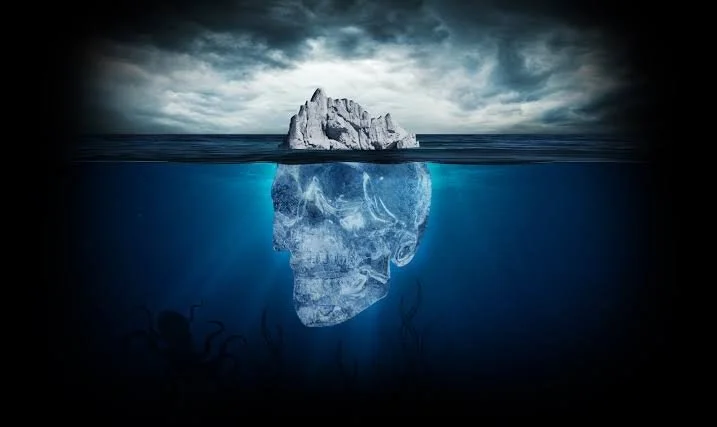
Antarctica is mysterious because so much of it is still unknown. Almost the whole continent is buried under ice, most of it has never been walked on, and scientists are still finding lakes, mountain ranges and life forms hidden beneath the surface. Add extreme cold, months of darkness and no permanent population, and you get the least understood place on the planet.
That mystery isn't just a feeling you get from photos. It's measurable. We have better maps of parts of Mars than of the land under the Antarctic ice sheet. The continent was the last to be discovered, it has no native people, and it's governed by a treaty rather than any single country. Some of what makes it strange has a clear scientific answer. Some of it still doesn't.
Quick answer
Antarctica feels mysterious because about 98% of it is covered by ice up to 4.8 km (3 miles) thick, hiding mountains, hundreds of lakes and records of Earth's past that scientists are still uncovering. Its extreme cold, strange light, isolated wildlife and lack of any permanent population add to the sense that it's a world apart.
History
1. It Was the Last Continent Ever Found
People imagined it for 2,000 years before anyone saw it.
Ancient Greek geographers guessed that a great southern land must exist to "balance" the northern continents. For centuries, maps showed a vague shape labeled Terra Australis Incognita, the unknown southern land. Captain James Cook crossed the Antarctic Circle in the 1770s and circled the continent without ever seeing it, turned back by pack ice.
The first confirmed sightings came in 1820, from Russian, British and American expeditions within months of each other. The first undisputed landing on the mainland didn't happen until decades later, and the South Pole wasn't reached until 1911. Every other continent had been settled by humans for thousands of years before anyone set eyes on this one. Our guide to famous Antarctic explorers covers the people who filled in the map.
| Milestone | Year |
|---|
| Cook crosses the Antarctic Circle | 1773 |
| First confirmed sightings of the continent | 1820 |
| First people to reach the South Pole | 1911 |
| Antarctic Treaty signed | 1959 |
Geography
2. There's a Whole Landscape Hidden Under the Ice
Mountains the size of the Alps that no one has ever seen.
The Antarctic ice sheet holds about 90% of the ice on Earth and roughly 70% of its fresh water. It averages close to 2 km (1.2 miles) thick and reaches about 4.8 km (3 miles) at its deepest. If it all melted, global sea levels would rise by around 58 meters (190 feet).
Underneath is a full landscape of valleys, basins and mountain ranges. The strangest is the Gamburtsev range in East Antarctica, a chain roughly the size of the European Alps that's completely buried. Soviet scientists detected it in 1958, but it wasn't mapped in any detail until radar surveys in 2008–09. Geologists still debate how such sharp, young-looking peaks survived for hundreds of millions of years in the middle of an old, stable continent. We cover the peaks you can actually see in our guide to mountains in Antarctica.
Ice cover~98%of the continentOnly a sliver of rock is ever exposed.
Deepest ice~4.8 kmabout 3 milesEnough to bury the Alps, and it does.
Share of Earth's ice~90%and ~70% of fresh waterAround 58 m of sea level, locked up.
Hidden Water
3. Lakes and Rivers Flow Under Miles of Ice
Liquid water in the coldest place on Earth.
It sounds impossible, but the base of the ice sheet is often wet. Pressure from the ice above and geothermal heat from below keep water liquid. Scientists have identified hundreds of subglacial lakes, many linked by rivers that drain and refill over months or years.
The most famous is Lake Vostok, buried under nearly 4 km of ice below the Russian Vostok Station. It's one of the largest lakes on Earth, around 250 km (155 miles) long, and it may have been sealed off from the surface for millions of years. Russian drillers first reached its water in 2012.
In 2013, a US team drilled into a smaller lake, Subglacial Lake Whillans, and found living microbes, thousands of cells per milliliter, surviving in total darkness on minerals rather than sunlight. It was the first direct proof that life exists in these hidden lakes, and one reason NASA pays close attention: icy moons like Europa and Enceladus may hold similar buried oceans.
Strange Sights
4. Blood Falls: A Glacier That Bleeds
A mystery that took about a century to solve.
In 1911, geologist Griffith Taylor found a rust-red stain pouring out of the face of a glacier in the McMurdo Dry Valleys. Early explorers guessed it was red algae. It isn't. The color comes from salty, iron-rich water trapped beneath Taylor Glacier. The brine comes out clear, then turns red within moments as the iron meets oxygen and rusts.
The brine is so salty it stays liquid well below freezing, and it hosts its own community of microbes that live without light. Researchers are still studying the tiny iron-rich particles in the water, first described in detail in 2023. Blood Falls sits in the Ross Sea region, so you'll only see it on a small number of specialist voyages and flightseeing trips from that side of the continent.
Strange Places
5. The Dry Valleys: Antarctica Without Ice
The closest thing to Mars on Earth.
Most people picture Antarctica as endless white. The McMurdo Dry Valleys are brown, rocky and almost completely free of ice and snow. Fierce katabatic winds, which can top 300 km/h (about 200 mph), strip away moisture before it can settle. Parts of the valleys are thought to have seen no rain for a very long time, and NASA has used the area to test equipment for Mars missions.
The valleys hold some genuinely odd features. Don Juan Pond is one of the saltiest bodies of water on Earth, so salty it rarely freezes even at temperatures far below zero. Mummified seals, some hundreds or even thousands of years old, lie scattered miles inland, apparently having wandered in the wrong direction and never made it back to the sea.
It's a reminder that Antarctica is technically the largest desert on Earth. The interior gets less precipitation than much of the Sahara.
Extremes
6. Cold Beyond Belief
The kind of cold that changes how things work.
The coldest air temperature ever recorded by a weather station is −89.2°C (−128.6°F), at Vostok Station in July 1983. Satellites have since measured surface temperatures near −98°C (−144°F) in shallow hollows on the East Antarctic plateau. At those temperatures, a single breath can hurt your lungs.
The cold also creates some strange sounds. Scientists recording seismic sensors on the Ross Ice Shelf found that wind blowing over snow dunes makes the whole shelf "hum" at a pitch too low for humans to hear. For a sense of what visitors actually experience on the Peninsula, which is far milder, see our guide to Antarctica's temperature right now.
See Antarctica's mysteries for yourself
Tell us what you'd most like to see and we'll send a free custom sample itinerary, with exclusive offers we can access through our industry relationships.
Get My Free Itinerary
Light & Illusion
7. Light, Mirages and Whiteouts
A place where your eyes can't always be trusted.
Antarctic light behaves differently. In summer, the sun barely sets, and near the pole it doesn't set at all for months. In winter, there's weeks of near-total darkness, lit by the green and red curtains of the aurora australis.
The cold, layered air also bends light. Mirages called fata morgana can stretch icebergs into towering castles or make distant mountains appear to float above the horizon. Early explorers mapped mountain ranges that turned out not to exist.
Then there's the whiteout. When cloud cover and snow blend into the same flat white, all shadows and depth disappear. You can't tell up from down, or whether the ground ahead is a gentle slope or a drop. Pilots and expedition teams treat whiteouts with deep respect, and it's one reason landings are always weather-dependent.
Wildlife
8. Life That Shouldn't Be Possible
Evolution's strangest solutions to extreme cold.
- Icefish have clear blood with no hemoglobin, the only vertebrates known to live this way. Cold water holds more oxygen, so they get by without red blood cells.
- Antifreeze proteins let many Antarctic fish swim in water below 0°C without their blood freezing.
- Emperor penguins breed in the dead of winter, with males balancing a single egg on their feet for about two months in temperatures that can fall below −40°C.
- Antarctic krill, each only a few centimeters long, form swarms that can stretch for kilometers and feed almost every larger animal on the continent. Our Antarctic krill guide explains how.
Life on land is sparse, but it's there. Mosses, lichens and tiny insects called springtails survive in the few ice-free patches, and Antarctica's largest purely land animal is a wingless midge barely a centimeter long.
Science
9. A Frozen Record of Earth's Past
Air from a million years ago, sealed in ice.
Every year, fresh snow buries the year before, trapping tiny bubbles of air. Drill down, and you travel back in time. In January 2025, the European Beyond EPICA project drilled a 2.8 km ice core that holds a climate record reaching back at least 1.2 million years, the oldest continuous record of its kind. Scientists hope it will explain why Earth's ice-age cycles suddenly changed rhythm about a million years ago.
Antarctica also collects things from space. Meteorites that land on the ice are carried by glacier flow to places where the ice thins, leaving them stranded on the surface. Researchers have recovered tens of thousands of them. One, known as ALH 84001, came from Mars and made global headlines in 1996 when a NASA team claimed it held possible signs of ancient life. That claim is still debated.
Politics
10. A Continent No One Owns
One of the most unusual agreements in the world.
Seven countries claim slices of Antarctica, and several of those claims overlap. Under the Antarctic Treaty, signed in 1959 by 12 countries and now joined by more than 55, those claims are frozen. The continent is reserved for peace and science, military activity is banned, and treaty nations can inspect each other's stations.
A 1991 environmental protocol added a ban on mining. There's no capital, no government and no permanent residents, only a few thousand scientists and support staff in winter and more in summer. For a place so large, that absence of ownership adds to the sense that it belongs to no one and everyone at once.
Myths
11. Myths vs. Facts
Where real mystery ends and internet mystery begins.
Antarctica's genuine unknowns have inspired plenty of stories that don't hold up. The most common:
| Myth | Fact |
|---|
| There are hidden pyramids under the ice | The "pyramids" in viral photos are natural peaks shaped by erosion, a common mountain form called a nunatak or horn. |
| Visiting Antarctica is forbidden | More than 100,000 tourists visit each season under industry and treaty guidelines. |
| Operation Highjump was a secret battle | The 1946–47 US Navy expedition was a training and mapping mission, the largest ever sent to Antarctica. |
| Antarctica is a wall of ice around a flat Earth | It's a continent that people fly over, sail around and have crossed on foot many times. |
The real mysteries, like buried mountains, living lakes and million-year-old air, are stranger than the invented ones anyway.
Visit
12. How to See the Mystery for Yourself
You don't need to be a scientist to feel it.
Most visitors reach Antarctica on a 10–12 day expedition cruise to the Antarctic Peninsula from Ushuaia, Argentina. You won't see Lake Vostok or the Gamburtsevs, but you'll see plenty of what makes the place feel otherworldly: towering blue icebergs, 24-hour light, fata morgana on the horizon, and wildlife that has no fear of people.
Some stops have their own strange stories. Deception Island is a flooded volcano you sail straight into, with abandoned whaling tanks and steaming beaches. Longer voyages cross the Antarctic Circle. A few rare Ross Sea expeditions reach the Dry Valleys and Blood Falls region. If you're wondering what it costs to go, our trip cost guide breaks it down.
Antarctica's Mysteries at a Glance
Which of these you can see on a trip, and where.
Frequently Asked Questions
Why is Antarctica considered so mysterious?
Because most of it is hidden. Around 98% of the continent is under ice, concealing mountains, lakes and geology that scientists have only begun to map, and it has no permanent population.
What is hidden under the ice in Antarctica?
Mountain ranges like the Gamburtsevs, hundreds of subglacial lakes such as Lake Vostok, deep basins and canyons, and ancient landscapes that last saw daylight millions of years ago.
Is it true that nobody owns Antarctica?
Yes, in practice. Seven countries have claims, but the Antarctic Treaty freezes them and reserves the continent for peaceful scientific use.
Can tourists visit Antarctica?
Yes. More than 100,000 people visit each season, mostly on expedition cruises to the Antarctic Peninsula between November and March.
What is the scariest thing about Antarctica?
For most visitors, it's the whiteout, when snow and sky merge and all sense of depth disappears. Expedition teams plan around weather carefully, so landings only happen when conditions are safe.
About these facts
Figures reflect published scientific research as of September 2026. Antarctic science moves quickly, and new discoveries under the ice are announced regularly.
Ready to see Antarctica in person?
Reach out and a specialist will help you choose the voyage that gets you closest to the places you've read about, with exclusive offers through our industry partners.
Reach Out to Us