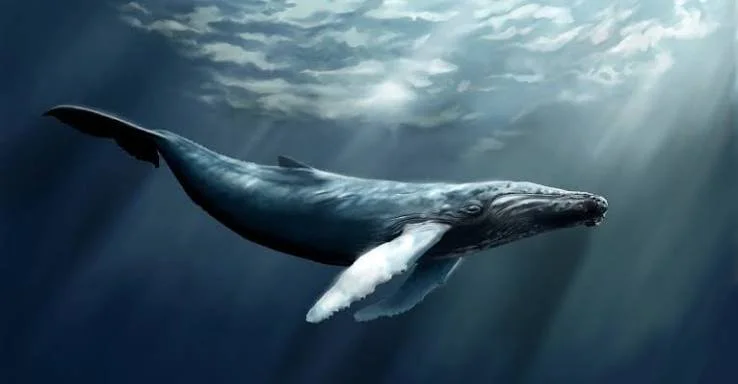
How big humpbacks get, why they swim 8,000 km to eat krill, how bubble-net feeding works, and where a sleeping whale might drift right past your Zodiac.
By Amer Khan | 9 min read
Will you see a humpback whale in Antarctica? If you travel in the second half of the season, very likely. Humpbacks are the whale most visitors meet on an Antarctic Peninsula cruise, and they're rarely shy about it. They surface beside Zodiacs, sleep at the surface in sheltered bays, and slap their flippers on the water for reasons scientists are still debating.
They're also a genuine conservation success story. Whaling reduced Southern Hemisphere humpbacks to a small fraction of their former numbers. Today, some populations are close to fully recovered, and the bays of the Peninsula are busy again from January onward.
Here's what to know about Antarctica's most visible whale: how big it gets, what it eats, how it hunts, and where and when to see one.
Species Profile
1. What Is a Humpback Whale?
A baleen whale built for long trips and big meals
Humpbacks are baleen whales. Instead of teeth, they have plates of baleen that hang from the upper jaw and work like a sieve. A humpback takes a huge gulp of water, pushes it out through the baleen, and swallows whatever stays behind, which in Antarctica means krill.
They're found in every ocean, but the Southern Hemisphere populations follow a strict annual pattern. They spend the austral summer feeding in Antarctic waters and the winter breeding in the tropics, off places like Brazil, Colombia, Ecuador, Australia and southern Africa.
Lifespan: generally 45–50 years, and often longer
Conservation status: Least Concern globally, after decades of recovery
Name: from the small hump in front of the dorsal fin, which shows as the whale arches to dive
Anatomy
2. Size, Flukes & How to Recognize One
Long flippers, a knobbly head and a tail like a fingerprint
Feature
Detail
Length
About 12–16 m (40–52 ft)
Weight
Roughly 25–40 tonnes
Flippers
Up to about 5 m, around a third of body length
Blow
Bushy and wide, about 3 m tall
Calf at birth
About 4–5 m, born in tropical waters
The easiest giveaway is the tail. Humpbacks lift their flukes high as they dive, showing a black-and-white underside with a ragged trailing edge. Every pattern is unique, and researchers identify individual whales from tail photos, much as police use fingerprints. Your photos can contribute: citizen-science projects such as Happywhale match travelers' fluke shots to known whales.
Up close, look for the knobs on the head (called tubercles, each with a hair follicle) and the extraordinarily long white-edged flippers. No other whale has anything like them.
Diet
3. What Humpbacks Eat
Krill, krill and more krill
In the Southern Ocean, a humpback's diet is almost entirely Antarctic krill. They feed intensely through the summer, taking in an estimated one to two tonnes a day, to build the fat reserves that carry them through the rest of the year.
Summer: heavy feeding in Antarctic waters, from roughly December to May
Winter: little or no feeding on the tropical breeding grounds
Why it matters to you: where krill gathers, humpbacks follow, so the krill-rich bays of the Peninsula are the whale hotspots
That fasting is remarkable. A mother humpback may nurse a calf for months on the breeding grounds and swim thousands of kilometres back to Antarctica, all on the energy she stored the previous summer.
Behavior
4. Bubble-Net Feeding
Teamwork, spirals of air and a mouthful of krill
Humpbacks have one of the cleverest hunting techniques in the ocean. One or more whales dive below a krill swarm and swim upward in a spiral, releasing a ring of bubbles. The rising curtain of air traps the krill in a tight column. Then the whales lunge up through the middle with their mouths open.
Seeing it from a ship or Zodiac is a highlight of any trip. First a ring of bubbles appears on a calm surface. A few seconds later, several huge open mouths break through at once, throat pleats bulging.
Other behaviors you may see:
Logging: whales resting motionless at the surface, often in sheltered bays
Breaching: launching most of the body clear of the water
Pectoral and tail slapping: loud slaps that likely help with communication
Spyhopping: rising vertically to look around, occasionally right at a Zodiac
Migration
5. The Longest Commute in the Ocean
Up to about 8,000 km each way
Humpbacks that feed around the Antarctic Peninsula spend the winter off the Pacific coast of South and Central America. Tracked whales have covered around 8,000 km (5,000 miles) each way, one of the longest known migrations of any mammal.
Arrival: the first whales reach the Peninsula around December
Peak: numbers build through January and peak from February to April
Departure: most head north again by May and June, as the sea ice returns
That timing is why late-season voyages are often called "whale season". A cruise in November may see few humpbacks, while one in March may see dozens in a single afternoon.
Conservation
6. Population & Recovery
From the brink to busy bays
Twentieth-century whaling killed hundreds of thousands of Southern Hemisphere humpbacks, and some populations fell to just a few percent of their original size. Commercial hunting of humpbacks was banned in 1966.
The recovery since then has been striking. A 2019 study of the population that feeds around South Georgia estimated it had rebounded to roughly 93% of its pre-whaling size. Numbers around the Antarctic Peninsula have grown strongly too.
That doesn't mean the pressure is gone:
Krill fishing: concentrated in the same Peninsula waters where humpbacks feed
Climate change: less sea ice can mean less krill over time
Ship strikes and entanglement: mostly along migration routes and breeding grounds
Where to Go
7. Where to See Humpbacks
The Antarctic Peninsula, late in the season
Almost every Antarctic Peninsula voyage has a good chance of humpbacks, but a few places stand out:
Wilhelmina Bay: so reliable that guides nickname it "Whale-helmina Bay"
Andvord Bay and Neko Harbour: sheltered water where whales often rest and feed
The Gerlache Strait: a busy whale corridor seen from the ship's deck
Paradise Harbour and the Errera Channel: good for Zodiac encounters
South Georgia: increasingly good offshore as the population recovers
The Drake Passage crossing can also produce sightings. Spend time on deck and watch for the bushy blow.
Field Tips
8. Watching Whales Well
Let the whale set the distance
Antarctic tour operators follow IAATO wildlife-watching guidelines. Ships and Zodiacs slow down near whales, approach from the side rather than head-on, and never chase or cut off an animal. When a whale chooses to come close, drivers usually cut the engine and wait.
Listen first: you'll often hear the blow before you see it
Watch the tail: a raised fluke usually means a deep dive of five to 15 minutes
Put the camera down sometimes: hearing a whale breathe beside a quiet Zodiac is unforgettable
Humpback Whale vs. Antarctic Minke Whale
The two baleen whales you're most likely to see on the Peninsula
Feature
Humpback Whale
Antarctic Minke Whale
Length
About 12–16 m
About 8–10 m
Blow
Tall and bushy, easy to see
Low and faint, often invisible
Flippers
Very long, white-edged
Short, dark
Tail on diving
Usually raised high
Rarely shown
Behavior around boats
Often curious and slow
Quick, often in the pack ice
Where tourists see them
Open bays and channels
Among ice floes and in narrow channels
Frequently Asked Questions
When is the best time to see humpback whales in Antarctica?
February and March. Humpbacks start arriving around December, and their numbers peak late in the season, when the bays of the Antarctic Peninsula can hold dozens of feeding whales.
How big is a humpback whale?
Adults are usually 12–16 m (40–52 ft) long and weigh roughly 25–40 tonnes. Their flippers alone can reach about 5 m.
What do humpback whales eat in Antarctica?
Almost entirely Antarctic krill. They feed heavily through the summer and fast for much of the year on their tropical breeding grounds.
Are humpback whales dangerous to Zodiacs?
No. Humpbacks are generally calm and often curious. Guides keep a respectful distance under IAATO guidelines, and encounters are very safe.
Where do Antarctic humpbacks go in winter?
North to tropical breeding grounds. Whales from the Antarctic Peninsula mostly migrate to the Pacific coast of South and Central America.