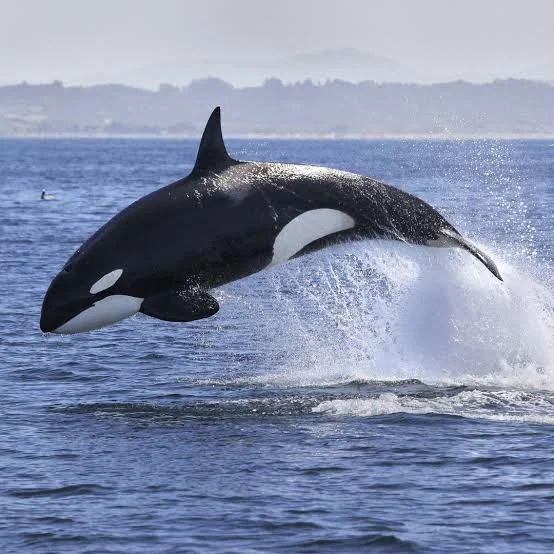
Killer Whale (Orca): Facts, Diet & Where to See Them
Antarctica has several distinct types of killer whale, each with its own diet and hunting style. Here's how to tell them apart, and where you might see one from the ship.
By Amer Khan | 9 min read
Is a killer whale actually a whale? Technically, it's the largest member of the dolphin family. But at up to 9 m long with a dorsal fin taller than most people, it doesn't much matter what you call it. Seeing orcas in Antarctica is a highlight of any trip.
Antarctica is also one of the most interesting places on earth to see them. Several distinct types live in the Southern Ocean, and each has its own prey, hunting style and even appearance. One specializes in minke whales, one washes seals off ice floes with coordinated waves, and one hunts fish deep in the Ross Sea.
Sightings are less predictable than humpbacks, which is exactly why they're treasured. Here's what to know, and where your chances are best.
Species Profile
1. What Is a Killer Whale?
The ocean's top predator, and a very big dolphin
Killer whales are toothed whales and the largest species of oceanic dolphin. They live in every ocean, from the tropics to the pack ice, and sit at the very top of the food chain. Nothing hunts an adult orca.
The name "killer whale" is thought to come from early sailors, who saw them attacking large whales and called them "whale killers". "Orca" comes from the scientific name, Orcinus orca.
Lifespan: females often live 50+ years; males usually 30 or so
Social life: tight family groups called pods
Conservation status: Data Deficient globally, partly because the different types may be separate species
Anatomy
2. Size, Markings & How to Recognize One
Black, white and unmistakable
Feature
Detail
Length
Males up to about 9 m; females about 7 m
Weight
Males up to roughly 6 tonnes or more
Dorsal fin
Males up to about 1.8 m, tall and straight; females shorter and curved
Teeth
Around 40–56 interlocking conical teeth
Speed
Short bursts of roughly 45–55 km/h
The tall, triangular dorsal fin of an adult male is visible from far away and is often the first thing you'll spot. Behind the fin is a grey "saddle patch", and each animal has a white eye patch above and behind the eye. The shape and size of that eye patch is one of the main ways to tell Antarctica's orca types apart.
Many Antarctic orcas look yellowish or brownish rather than crisp black and white. That's a film of tiny algae called diatoms, which builds up on their skin in cold water.
Ecotypes
3. Antarctica's Killer Whale Types
Same species name, very different lifestyles
Scientists recognize several Antarctic killer whale "ecotypes". They look slightly different, eat different prey and don't appear to mix. Some researchers argue they're separate species.
Type
Look
Main prey
Where
Type A
Classic black and white; medium eye patch
Minke whales
Open water, around the continent
Large Type B (pack ice)
Grey and white with a very large eye patch
Seals on ice floes
Pack ice, often the Peninsula and Weddell Sea
Small Type B (Gerlache)
Similar, but smaller
Penguins, likely fish
Gerlache Strait and Peninsula channels
Type C
Smallest; slanted, narrow eye patch
Antarctic toothfish
Dense pack ice, mainly the Ross Sea
Type D
Tiny eye patch, rounded head
Likely toothfish
Sub-Antarctic open ocean; rarely seen
On a Peninsula cruise, you're most likely to meet Type B orcas. Type C belongs to Ross Sea voyages, and Type D is among the least-seen large animals on the planet.
Diet
4. What Killer Whales Eat
It depends entirely on who's asking
As a species, killer whales eat almost anything: fish, squid, penguins, seals and other whales. But each Antarctic type is a specialist, and the diet tells you a lot about where to look.
Whale hunters (Type A): chase and tire out minke whales in open water
Seal hunters (large Type B): target Weddell seals and other seals resting on floes. See our guide to Antarctica's seals.
Penguin and fish eaters (small Type B): patrol the channels near penguin colonies
Fish eaters (Types C and D): hunt Antarctic toothfish in the ice and deep water
Orcas are one of the few animals that prey on leopard seals, Antarctica's other top predator.
Behavior
5. How They Hunt
Wave-washing, teamwork and patience
The most famous Antarctic hunting technique is "wave-washing". A group of pack-ice orcas spots a seal on a small ice floe. They line up, swim at the floe side by side and dive together at the last moment. The wave they create tips the floe or washes the seal into the water.
It's a learned skill, passed from older whales to younger ones, and it can take several tries. Pods have also been seen breaking floes apart before a wave attack.
Spyhopping: orcas rise vertically to look across the ice for seals
Cooperative hunting: the whole pod coordinates, often with calves watching
Sharing: food is frequently shared within the family group
Family Life
6. Family Life
Pods built around mothers
Killer whales live in stable family groups, usually led by an older female. Pods in Antarctica are often from a few animals up to around 20, and several pods sometimes travel together.
Calves are born after a pregnancy of about 17 months and stay with their mothers for years. Much of what an orca knows, including hunting techniques and calls, is learned from its family. That's why each ecotype keeps its own traditions.
Research in Antarctica has also found that some types travel north to warmer subtropical waters for short trips, likely to shed and regrow skin without losing body heat in the cold.
Where to Go
7. Where to See Killer Whales
Anywhere, any time, if you're lucky
Orcas range widely and don't follow a timetable, so there's no guaranteed spot. These are the places where the odds are best:
The Gerlache Strait: home ground of the small Type B "Gerlache" orcas, seen on many Peninsula voyages
The Lemaire Channel and Paradise Harbour: narrow waters where pods sometimes pass close
The Weddell Sea pack ice: the best area for seal-hunting Type B pods
The Ross Sea: home of Type C orcas, on specialist long-range voyages
The Drake Passage and South Georgia: occasional sightings at sea
Ships usually announce whale sightings over the PA system. Keep a warm layer and your camera near the cabin door.
Field Tips
8. Watching Orcas Well
Quiet engines, steady distance
Orcas are fast, and a sighting may last minutes or an hour. Under IAATO guidelines, ships and Zodiacs slow down, avoid cutting across a pod's path and don't separate mothers and calves.
Scan for the fin: an adult male's dorsal fin is visible long before the body
Watch the floes: seals hauled out on small floes can draw hunting pods
Share your photos: researchers use dorsal fin and eye-patch photos to identify individuals
Killer Whale vs. Leopard Seal
Antarctica's two top predators, side by side
Feature
Killer Whale
Leopard Seal
Animal group
Toothed whale (dolphin family)
True seal
Length
Up to about 9 m
Up to about 3.8 m
Social life
Family pods
Mostly solitary
Main prey
Whales, seals, penguins or fish, by type
Krill, penguins, fish, young seals
Predators
None
Killer whales
Where tourists see them
From the ship in channels and at the ice edge
On ice floes near penguin colonies
Frequently Asked Questions
Are there killer whales in Antarctica?
Yes. Several distinct types of killer whale live in the Southern Ocean, and they're seen regularly on Antarctic Peninsula cruises, though not on every trip.
What do killer whales eat in Antarctica?
It depends on the type. Some hunt minke whales, some wash seals off ice floes, some eat penguins, and some specialize in Antarctic toothfish.
Is a killer whale a whale or a dolphin?
Both, technically. It's a toothed whale and the largest member of the oceanic dolphin family.
Are killer whales dangerous to people in Antarctica?
There are no records of wild orcas harming people in Antarctica. Zodiac drivers keep a safe distance and follow IAATO guidelines.
When is the best time to see orcas in Antarctica?
There's no reliable peak. Orcas are seen throughout the November–March season. Spending more time in the Gerlache Strait or at the pack-ice edge improves your chances.