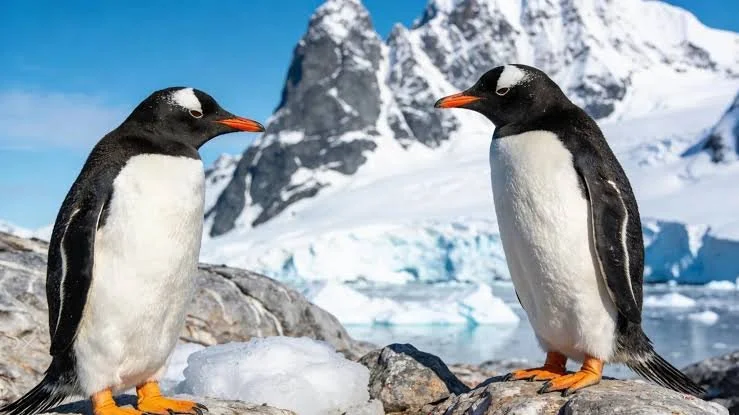
The fastest swimmer of all penguins, a determined pebble thief, and the species you're most likely to meet on your first Antarctic landing.
By Amer Khan | 8 min read
Which penguin will you see first in Antarctica? Very often, a gentoo. They nest at many of the most visited landing sites on the Antarctic Peninsula, and they're rarely bothered by visitors. Many travelers have their first penguin encounter with a gentoo waddling along a "penguin highway" in the snow.
Gentoos are also one of the few penguins doing well as the Peninsula warms. While Adélie and chinstrap numbers have fallen in some areas, gentoos have spread south and grown in number.
Here's how to recognize them, what they eat, why they steal pebbles, and where to see them.
Species Profile
1. What Is a Gentoo Penguin?
The brush-tailed, orange-billed regular of the Peninsula
The gentoo is one of three "brush-tailed" penguins, alongside the Adélie and the chinstrap. The name comes from the long, stiff tail feathers that sweep behind them as they walk.
Gentoos breed across a wide range: the Antarctic Peninsula, the South Shetland Islands, South Georgia, the Falkland Islands and other sub-Antarctic islands. Unlike some penguins, many gentoos stay close to their colonies all year rather than migrating far.
Lifespan: typically 15–20 years in the wild
Conservation status: Least Concern
Taxonomy note: some scientists have proposed splitting gentoos into four separate species by region
Anatomy
2. Size, Colors & How to Recognize One
Look for the orange bill and the white headband
Feature
Detail
Height
About 75–90 cm (2.5–3 ft)
Weight
Roughly 5–8.5 kg; heaviest before molting
Eggs
Usually two per clutch
Incubation
About 34–36 days, shared by both parents
Dive depth
Usually under 100 m; recorded deeper than 200 m
Gentoos are easy to pick out. Look for a bright orange-red bill, a white patch stretching over the top of the head like a headband, and pinkish-orange feet. Among the brush-tailed penguins, they're the largest and have the longest tail.
They're also noisy. The gentoo call is a loud, braying trumpet, delivered with the head thrown back.
Diet
3. What Gentoo Penguins Eat
Krill, plus more fish than their neighbors
Gentoos are flexible eaters, which may be part of their success. What they eat depends on where they live:
Krill: the main food for most Peninsula colonies. Learn more in our Antarctic krill guide.
Small fish: especially important in the Falklands and other northern colonies
Squid: a smaller part of the diet
They usually feed close to shore and make short foraging trips, often returning to the colony the same day. That's why you'll see a steady flow of gentoos heading to and from the water on a landing.
Behavior
4. The Fastest Penguin in the Water
Up to about 36 km/h underwater
On land, gentoos waddle, hop and occasionally slide on their bellies. In the water, they're transformed. Gentoos are the fastest-swimming penguins, reaching bursts of about 36 km/h (22 mph).
They often "porpoise" at speed, leaping out of the water in short arcs to breathe without slowing down. Groups porpoising past a Zodiac are a common and very photogenic sight.
Speed helps them escape predators such as leopard seals, which often patrol the water just off gentoo colonies.
Breeding
5. Pebbles, Nests & Chicks
Where a good stone is worth stealing
Gentoos build round nests from pebbles, which keep eggs above meltwater and snow. Good pebbles are in short supply, so theft is common. It's one of the most entertaining things to watch at a colony: a penguin sneaks a stone from a neighbor's nest while the owner looks the other way.
Nest building: October to November, often on the first snow-free ground
Eggs: usually two, laid around November
Chicks: hatch from about late December; both parents take turns feeding
Crèches: by late January, chicks gather in groups while both parents fish
Feeding chases: later in the season, adults run from their hungry chicks, which chase them through the colony
Conservation
6. Population & Climate
One of the Peninsula's climate winners, for now
Gentoos number several hundred thousand breeding pairs, and the global population has been growing. On the Antarctic Peninsula, they've expanded south into areas that were once too icy for them.
Scientists think their flexible diet and year-round presence near colonies help them adapt to warming, while Adélie penguins, which depend more on sea ice, have declined in some of the same places.
That doesn't mean they're safe from every threat:
Krill fishing in the Peninsula region competes for their main food
Avian influenza has reached sub-Antarctic and Antarctic wildlife, and researchers are monitoring colonies
Local disturbance at busy landing sites is managed under IAATO rules
Where to Go
7. Where to Find Gentoo Penguins
Almost any Peninsula voyage, plus the Falklands and South Georgia
Cuverville Island: one of the largest gentoo colonies on the Peninsula, with iceberg views
Neko Harbour: a continental landing with gentoos nesting beside a glacier
Port Lockroy (Goudier Island): gentoos nest around the historic base and museum
Danco Island and Petermann Island: gentoo colonies with good hiking views
The Falkland Islands: home to a large share of the world's gentoos
South Georgia: gentoos nest alongside king penguins and fur seals
IAATO guidelines ask visitors to stay at least 5 m (15 ft) from penguins. Gentoos often break that rule themselves by walking up to you. If they do, stay still and let them pass.
Don't block the highways: penguins use narrow trails between the sea and their nests. Always give way.
Sit down: crouching or sitting quietly often brings the best close encounters
Mind the smell: colonies are pungent. Bring a set of outer layers you don't mind getting dirty.
Clean your boots: biosecurity washes before and after landings stop the spread of disease
Pack a standard zoom: 24-105mm is ideal for gentoos. See our camera gear guide.
Gentoo vs. Adélie vs. Chinstrap Penguin
The three brush-tailed penguins of the Peninsula, side by side
Feature
Gentoo
Adélie
Chinstrap
Height
About 75–90 cm
About 70 cm
About 70–75 cm
Key marking
Orange bill, white headband
White ring around the eye
Thin black chin strap
Bill
Orange-red
Short, mostly black
Black
Population trend (Peninsula)
Growing and spreading south
Declining in the north
Declining in many colonies
Where tourists see them
Most Peninsula landings, Falklands, South Georgia
Southern Peninsula, Danger Islands
South Shetlands, Deception Island
Frequently Asked Questions
How big is a gentoo penguin?
Gentoos stand about 75–90 cm (2.5–3 ft) tall and weigh roughly 5–8.5 kg, making them the third-largest penguin species.
What do gentoo penguins eat?
Mostly krill on the Antarctic Peninsula, plus small fish and squid. Fish make up more of the diet in northern colonies like the Falklands.
How fast can a gentoo penguin swim?
Up to about 36 km/h (22 mph) in short bursts, faster than any other penguin.
Why do gentoo penguins steal pebbles?
Pebbles build nests that keep eggs out of meltwater. Good stones are scarce, so penguins often take them from neighbors' nests.
When is the best time to see gentoo penguin chicks?
From late December through February. Chicks hatch around late December and gather in crèches by late January.